How to Choose a Web Designer in the UK: The Cheapest Web Quote Can Cost You the Most

Suley Tangun
Digital Marketing Specialist
Published · 7 min read
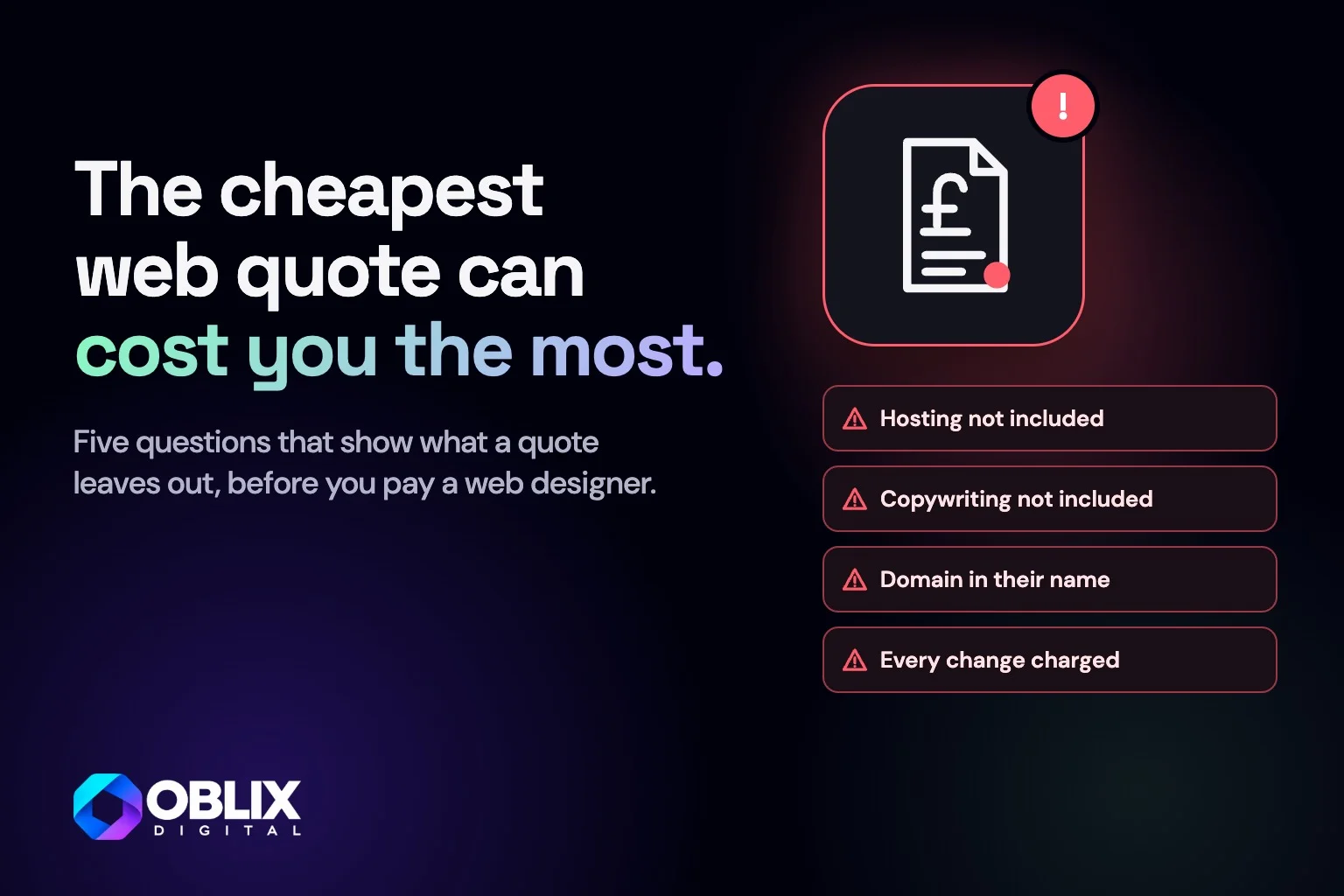
To choose a web designer, compare what each quote includes, who will own the site and domain, and what happens after launch, as well as the price. The cheapest quote often leaves out the things that cost you later: hosting, updates, copywriting or access to your own web address. These ten questions show you what you are actually buying.
The bottom line
- What to protect
- Owning a site you can edit, move and get back if the designer stops replying
- What to watch for
- Surprise bills for hosting, changes and fixes that weren't in the quote
- What to do
- Ask all ten questions in writing before you sign
- Conclusion
- Compare the answers as well as the totals. The cheapest quote can end up costing more
Questions about cost: what am I actually paying for?
1. What exactly is included in the price?
Ask how many pages, design revisions and forms are included, and who supplies the words and photos. Then ask what costs extra: the domain, hosting, analytics setup, SEO setup and any paid plugins.
My own websites run from £500 to £4,000+, depending on what the site needs to do. Whoever you choose, a written list of what's included is the only way to compare quotes fairly. I explain what drives the price in what a website really costs in London and Hertfordshire.
2. What will it cost each year after launch?
Hosting, domain renewal, software licences and maintenance all come round again every year. Ask for a yearly figure so a low build price can't hide a high running cost. My post on the hidden cost of a cheap website shows where those costs tend to appear.
Questions about ownership: will I control my own website?
3. Who owns the domain, hosting and site files?
Your domain (your web address) should be registered in your business's name, with logins you hold. Agree in writing who owns the design, content, code and any paid accounts.
If a designer holds the only logins and then stops replying, you can be left unable to change your site or move it elsewhere. Getting out of that often means paying for a new site. With the sites I build, you own the site outright, the domain is in your name and you're free to use any developer.
4. Can I update it myself?
Ask which CMS (content management system, the admin area where you edit pages) the site uses, and ask to see someone change a price or add a photo. You shouldn't have to pay for every small edit. Every site I build has a built-in CMS with a live preview, and comes with handover docs that show you how to make changes yourself.
Questions about results: will the site bring in enquiries?
5. What SEO work is included?
"SEO-friendly" can mean very little. Ask about page titles, meta descriptions, heading structure, a sitemap, redirects from any old site, image optimisation and analytics.
Be wary of anyone who guarantees a position. Google's own guidance says no one can guarantee a number one ranking on Google, and that if an SEO promises one, you should find someone else.
6. Who writes the content?
A good-looking site still struggles if it doesn't explain what you do, where you work and how to get in touch. Ask whether copywriting is included, and who checks facts, spelling and the calls to action.
7. How will enquiries be tested?
Ask whether forms, phone links, email delivery and conversion tracking (recording each enquiry in your analytics) will be tested before launch, and where enquiries will go. A form that emails nobody costs you work you never hear about.

Swipe or scroll through, and tap a slide to see it larger
Questions about quality and risk
8. Will it work properly on phones?
Ask how the site will be tested on phones and tablets, not only on a desktop screen. Menus, readable text and easy forms matter most on mobile.
9. How is security handled?
Ask about backups, software updates, SSL (the padlock that encrypts data between a visitor and your site), who has admin access and what happens if the site is hacked. The NCSC, the UK's National Cyber Security Centre, publishes a free small business guide covering backups and protecting your accounts.
10. Can I see live sites you've built?
Open their past work on your phone. Check it loads quickly, reads clearly and makes it easy to get in touch. Ask which parts they built themselves and which they handed to others.
What will the designer need from you, and when?
Ask for the stages of the project, what each one needs from you and what could delay launch. Hold-ups often come from waiting on words, photos and feedback, so knowing your part up front keeps things moving.
If you sell online, GOV.UK sets out what customers must be told before they order, including your business name, contact details and address. A good designer will know where that information belongs.
The best quote tells you exactly what you'll own, what you'll pay each year and who to call when something breaks.
Red flags when comparing web designers
Guaranteed rankings. No one can promise a position on Google.
The domain stays in their name. Your web address should belong to your business.
No written list of what's included. You can't compare a quote you can't check.
No live examples. Screenshots don't show whether a site actually works.
No plan for after launch. Every site needs updates, backups and the odd fix.
Weighing up quotes and want a straight answer to any of these questions? Get in touch.
Frequently asked questions
How do I choose a good web designer?
Compare what each quote includes, who will own the domain and site, what it costs each year after launch and how enquiries will be tested. Look at live sites they've built on your phone, and get the answers in writing.
Should I choose the cheapest web designer?
Not automatically. A low quote can leave out hosting, copywriting, updates or ownership of your domain, so compare what's included and the yearly running costs as well as the price.
Who should own my website and domain?
Your business. The domain should be registered in your name with logins you hold, and ownership of the design, content and code should be agreed in writing.
Can a web designer guarantee a first page ranking on Google?
No. Google's own guidance says no one can guarantee a number one ranking, and advises finding someone else if an SEO promises one.
How much does a small business website cost in the UK?
It depends on what the site needs to do. My websites run from £500 to £4,000+, and you should also budget for yearly costs such as hosting, domain renewal and maintenance.
What questions should I ask a web designer before hiring?
Ask what's included, what it costs each year, who owns the domain and files, whether you can edit it yourself, what SEO is included, who writes the content, how enquiries and security are handled, and to see live examples.