WordPress vs AI Website Builders: Which Is Best for Your Business?

Oblix Digital
Web design & SEO
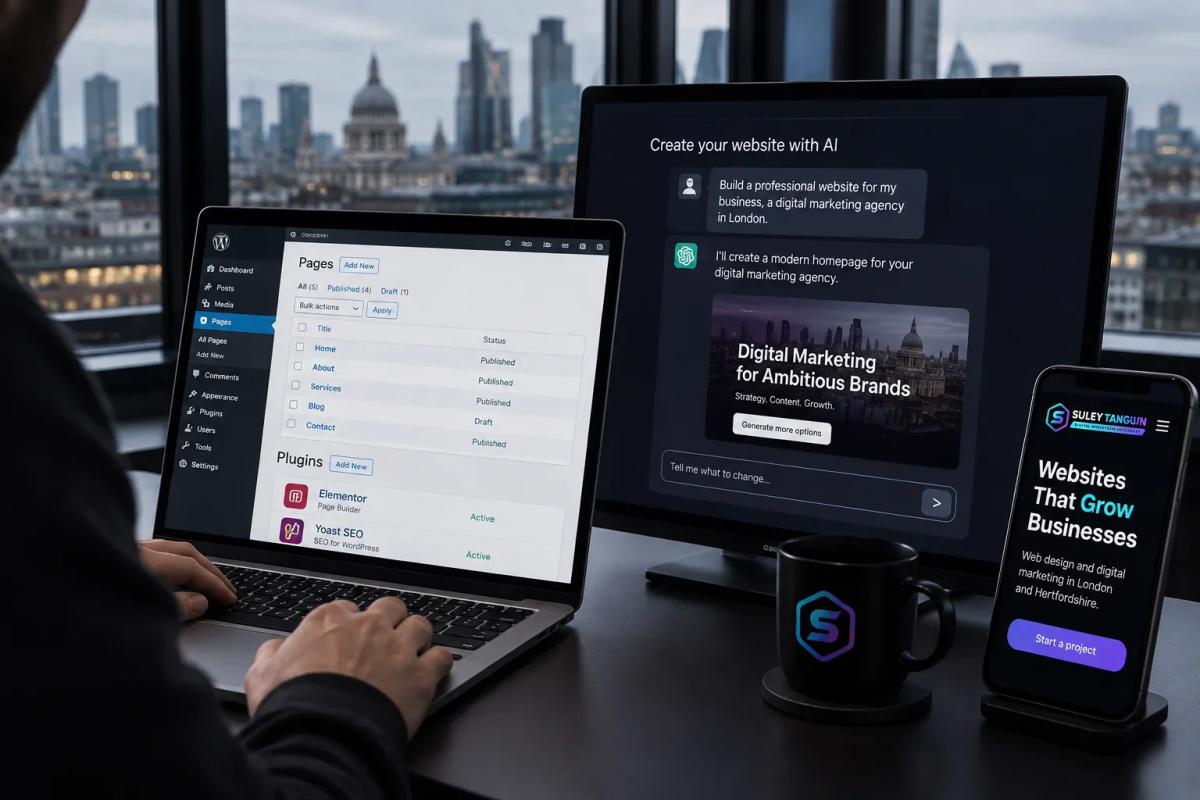
Most comparisons of WordPress and AI website builders are written by someone selling one of them. Both have their advantages and disadvantages, but for most small businesses in 2026 I'd skip both and have the site built by a professional, using AI coding tools such as Claude Code. Here is why.
In short
- WordPress has been around for over 20 years and comes with thousands of paid and free plugins, but every one of them needs keeping up to date.
- AI builders such as Lovable are quick, but security is easy to miss.
- Leaving an AI builder is harder than you think: you're tied to monthly fees, and moving can mean starting again.
- A professional build made with AI gives you a custom-built site, with security built in, a bespoke design and full control over your CMS and where it's hosted.
WordPress has been around for 20+ years
WordPress has been around for more than two decades, and comes with thousands of paid and free plugins and a huge community. For a large content library, a membership area or a big WooCommerce shop, it can still make sense.
For a typical small business site, though, the plugin library that makes WordPress flexible is also its main weakness. Every plugin adds code that needs updating, and a site running twenty or thirty of them can become slow if nobody keeps track of what is installed and why.
Patchstack, 2025 figures: 91% of reported WordPress vulnerabilities were in plugins. Source: patchstack.com
The same report found that 46% of the WordPress security flaws found in 2025 had no fix from the developer by the time they were made public. For the most heavily targeted flaws, attacks typically began about five hours after the flaw was announced. So remove any plugin you don't really use, and don't leave updates for a month.
That makes security ongoing maintenance rather than a one-off job. "Easy" WordPress often is not: installing it is easy, but setting it up to be fast, secure and properly structured for search still needs someone who knows what they are doing.
Your hosting matters too. WordPress runs on a programming language called PHP, and your host decides which version your site uses. WordPress recommends PHP 8.3 or newer, and warns that older versions that are no longer supported may expose your site to security flaws.
AI builders are quick, but easy to get wrong
AI builders such as Lovable are fast. Describe your business, answer a few questions and you can have something live the same afternoon. The catch is that nobody checks the result for you, so security is easy to miss.
Security report, 2025: a researcher scanned apps built with Lovable and found 170 with their data open to anyone, with database tables that could be read or changed, sometimes including personal details such as emails and phone numbers. Source: CVE-2025-48757, May 2025
The flaw came from how the apps' databases were set up, which is exactly the kind of thing an experienced developer checks before launch. Lovable disputes the report, saying each customer is responsible for protecting their own app's data, which is all the more reason to check who can read your data before you go live. The output also looks plausible while hiding problems an experienced eye would catch, such as slow load times, accessibility issues or a layout that does not lead visitors towards getting in touch.
Leaving an AI builder is harder than you think
Most AI builders tie you to their own platform, hosting and monthly fees. Some, Lovable among them, let you export the code, but others only let you take your text and images, so moving later can mean starting again. Check what you can take with you before you commit.
The better option: a professional build with AI
For most small businesses, I'd skip both and get a site built by a professional, using AI tools like Claude Code. You get the speed of AI, with someone who understands and checks every part of the code. That means:
- Custom built. Only the code your site needs, so there is no plugin bloat slowing it down.
- Security built in. With far less code to secure and no third-party plugins to keep patching, security is set up and checked properly from the start.
- Bespoke design. Made for your business and your customers, not a template that thousands of other sites share.
- Full control. You own the site outright, with a CMS you can edit yourself and your choice of where it is hosted, so there is no platform lock-in or monthly builder fee.
Because AI handles much of the repetitive work, it does not take the weeks a fully hand-coded build used to.
How I'd decide
- For most small businesses wanting a fast, secure site that is fully theirs: a professional custom build, made with AI tools.
- Running a very large content library, membership area or complex shop? WordPress, set up and maintained properly, may still fit.
- Only need a placeholder for a few weeks? An AI builder can do, but check what you can export and what it costs each month before you commit.
The custom route is what I do, using Claude Code to build client sites quickly without cutting the corners that matter. If you are weighing up your options and want a frank view on which fits, get in touch and I'll tell you, even if the answer isn't me.
This is my own opinion, based on what I have seen work in practice, and not legal, financial or professional advice. Every business is different, so take advice on your own situation before making a decision. Views are my own and not those of my employer.
Sources
- WordPress.org: Requirements
- Google Search Central: SEO Starter Guide
- NCSC: Small Business Guide
- Patchstack: State of WordPress Security in 2026
- CVE-2025-48757: Lovable Row Level Security flaw
- Superblocks: How 170+ Lovable apps were exposed
- Lovable docs: GitHub integration
Related reading
Frequently asked questions
Is WordPress still worth using in 2026?
For a very large content site, membership area or complex WooCommerce shop, it can be. For most small business sites I'd no longer pick it: Patchstack's 2025 figures put 91% of reported WordPress vulnerabilities in plugins, so every plugin is something else to keep updated.
Can I move my site away from an AI website builder later?
It depends on the platform. Many let you export your text and images, but very few let you take the design or code with you, so leaving often means rebuilding while you keep paying the monthly fee. Check what you can export before you commit, not after.
Are AI website builders bad for SEO?
Not inherently. Most handle the basics, such as page titles and mobile layouts, reasonably well. The limits appear when you need finer control over page speed, site structure or schema markup, and generic AI-written copy rarely matches the specific words your customers search for.
How much does a custom-coded website cost compared to WordPress?
My builds start from £500 for a basic brochure site and are priced case by case, whether the site is WordPress or custom-coded. The bigger difference is ongoing: a custom site has no plugin licences to renew and far less to keep patched.