Google Ads vs SEO: Which Should a Small Business Pay For?

Suley Tangun
Digital Marketing Specialist
Published · Updated · 6 min read
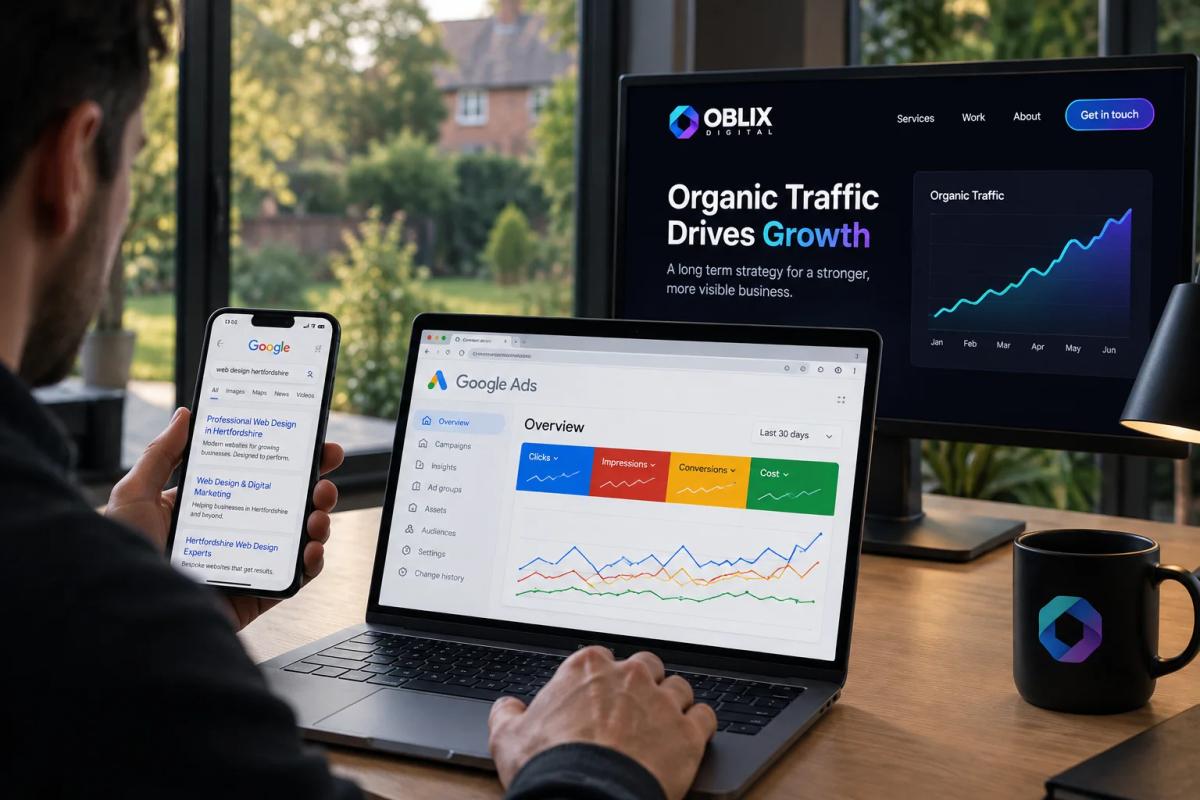
Google Ads vs SEO comes down to speed against staying power. Google Ads can bring enquiries within days but stops the moment you stop paying. SEO takes months to build but keeps bringing visitors without a charge for each click. If you need work this month, lean on ads. If you can wait, lean on SEO. Most small businesses do best with some of each.
The bottom line
- Where to use Google Ads
- When you need enquiries now. You pay for every click, for as long as you want to be seen
- Where to use SEO
- For cheaper enquiries later. Time or fees upfront, with months before it pays back
- What to do
- Run ads for enquiries now and build SEO alongside, so you are not renting your visibility forever
- Conclusion
- Don't choose on price alone. Plan for the months SEO takes before it pays back
1 day
Most new Google ads are reviewed within one business day
Months
How long Google says some SEO changes can take to show
What is the difference between Google Ads and SEO?
Google Ads, also called paid search or PPC (pay per click), puts your business in the sponsored results at the top of Google. You pay each time someone clicks.
SEO, short for search engine optimisation, is the work that helps your website appear in the normal, unpaid results. Nobody charges you per click, but you pay in your own time or in fees to earn the position.
How quickly do Google Ads and SEO work?
Google says most new ads are reviewed within one business day, so a campaign can start showing very quickly. Where your ad appears still depends on your bid, your budget, how relevant the ad is and who you are up against.
SEO is slower and less predictable. Google's own starter guide says some changes take effect in a few hours and others take several months. A competitive search can take longer than that.
Be wary of anyone who promises a page one ranking by a set date. Google's own advice is that no one can guarantee a number one ranking.
What Google Ads is good for
Testing before you commit. Find out which searches and offers bring in customers before you spend months on SEO for them.
Filling a gap. Cover a quiet month or get a new service or area noticed quickly.
Precise control. Choose the area, the time of day and the devices your ads show on.
When you pause the campaign, the ads disappear. What you learned about which searches turn into customers stays with you.
Before you add budget, make sure the clicks you already pay for are turning into enquiries. My eight Google Ads checks show where the money usually leaks.
What SEO is good for
Visits without a cost per click. Once a page ranks, each extra visitor costs you nothing extra.
Pages that keep earning. A page that ranks well can bring in enquiries for years if you keep it up to date.
Trust. Some people skip the sponsored results and click the first normal listing.
The trade-off is time and uncertainty. SEO pays back best for businesses that can keep at it steadily rather than in short bursts. My SEO services page explains how I approach it.
Why doing both often makes sense
Ads bring enquiries while SEO builds. Your ads data also shows which searches turn into paying customers, and those are the pages most worth building for SEO.
As your organic visits grow, review your ad spend. Don't cut it automatically: check whether the searches you now rank for are the same ones your ads were paying for.
Ads rent you a spot at the top of Google. SEO slowly buys you one.
How to split a limited budget between Google Ads and SEO
You don't have to split it evenly. Match it to how soon you need the work.
Cash is tight and you need enquiries this month: put more into Google Ads and keep SEO ticking over on your main service pages.
You can afford to be patient: lean towards SEO, with a small ads budget on the searches that already bring you customers.
You serve a local area: start with local SEO. A strong Google Business Profile can put you in the map results without a cost per click, and my local SEO guide covers how.
Few small businesses can rely on organic search alone in their first year, so a little paid search usually earns its place while SEO gets going.
Working out where your budget should go? Get in touch and I'll give you a considered view based on your market.
Frequently asked questions
Is Google Ads or SEO better for a small business?
Neither is better in every case. Google Ads brings enquiries quickly but stops when you stop paying, while SEO takes months but keeps bringing visitors without a cost per click. Most small businesses do best with some of each, weighted to how soon they need work.
Is SEO cheaper than Google Ads in the long run?
Often, once a page ranks, because you don't pay for each click. SEO still costs time or fees upfront and takes longer to pay back, so it is cheaper later rather than cheaper now.
How quickly do Google Ads start working?
Google says most new ads are reviewed within one business day, so a campaign can start showing quickly. Expect the first few weeks to be about learning which searches bring in customers.
How long does SEO take to work?
Google says some changes take effect within hours and others take several months. Competitive searches can take longer, and no one can guarantee a number one ranking.
Can I run Google Ads and SEO at the same time?
Yes, and it is often the most sensible approach. Ads cover the gap while SEO builds, and your ads data shows which searches are worth building pages for.
Do I lose my rankings if I stop SEO work?
Not straight away. Rankings tend to fade gradually rather than vanish, but pages that aren't kept up to date usually lose ground to competitors who keep working on theirs.