Local SEO for Small Businesses: How to Show Up for 'Near Me' Searches

Oblix Digital
Web design & SEO
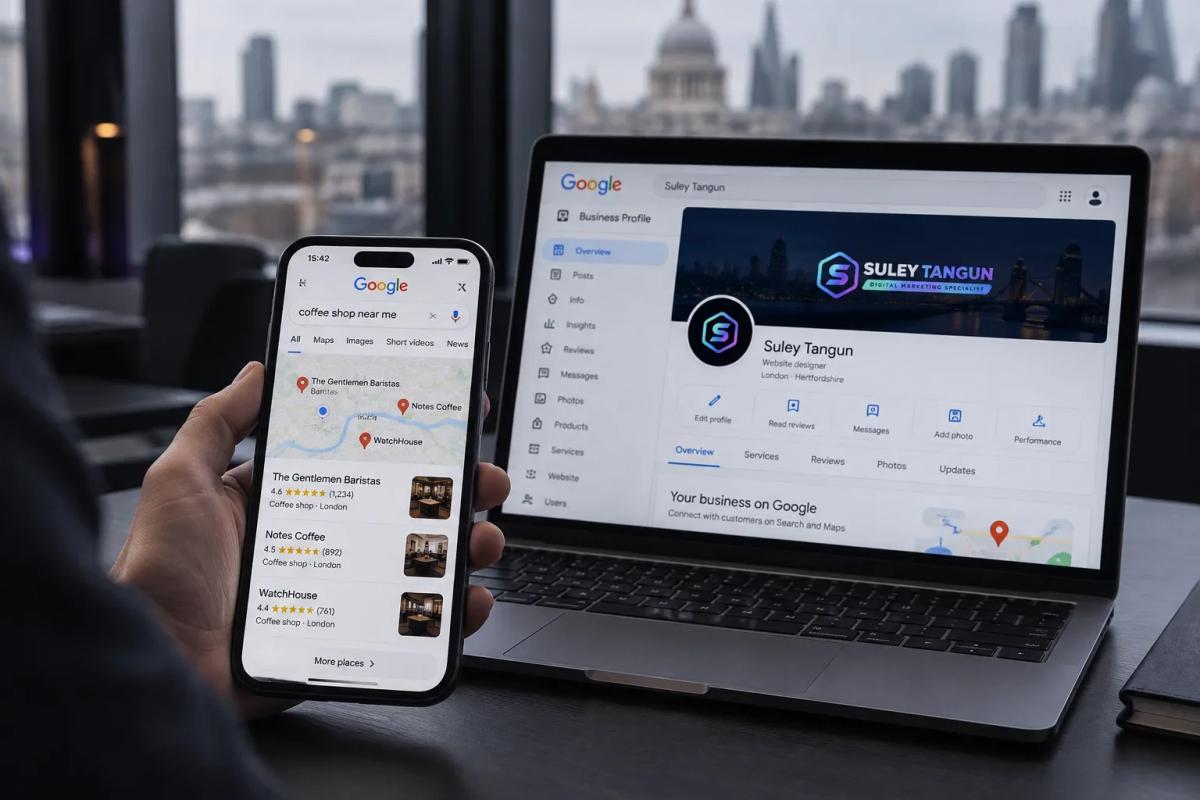
Most small businesses do not need to rank across the whole country. They need to appear when someone in Enfield, Barnet or St Albans searches for what they do. That is local SEO, and it is more achievable than the term suggests.
Start with your Google Business Profile
Your profile is what appears in the map results, and it is often seen before your website, so it is the right place to begin. I cover it in detail in a separate guide to getting your Google Business Profile right. This post covers everything around it.
Google says three things decide who shows up in its local results: relevance (how well your profile matches the search), distance (how far you are from the person searching) and prominence (how well known your business is). You cannot move closer to every customer, so work on the other two. Google also says businesses with complete and accurate information are more likely to show up.
Follow Google's listing rules
Google does not allow extra information in your business name, such as a tagline, a description of your services or a location, and says this could get your profile suspended. Use your real-world name, the one on your sign, website and paperwork. PO boxes and mailboxes at remote locations are not accepted as a business address. If you visit customers rather than them coming to you, Google says you should hide your address from customers.
Name the places you work
If you cover five towns, name all five on your website: in page titles, headings and body copy. "Serving Hertfordshire" is too vague to match someone searching for a plumber in Hitchin. A short section or page for each main area works well, provided each one says something specific rather than repeating the same paragraph with a different town name.
Keep your details identical everywhere
Your business name, address and phone number should match exactly on your website, your Google profile and any directory you are listed on. Small differences, such as an old phone number on one directory, can send customers to the wrong place and make it less clear that every listing is the same business.
Be selective about listings
A handful of accurate listings on established local and trade directories is worth more than dozens of random ones. Choose the ones your customers are likely to use, complete them properly and keep them up to date.
Ask for honest reviews
Reviews help customers choose you and support your local visibility. Google says more reviews and positive ratings can help your local ranking, so a rival with more reviews may sit above you on the map. Let customers describe their experience in their own words; do not ask them to include keywords, locations or a particular rating. A specific, honest review can help prospective customers understand the work and service they can expect. Ask straight after a job, while the customer is pleased, rather than with a generic email weeks later.
Make sure the site works on a phone
Many local searches happen on a phone, often when someone needs a business quickly. If your site is slow or awkward on mobile, they will go back and choose the next result.
How long it takes
Local SEO is not instant. Expect a few months of steady work before you see a real change, and it continues to build from there. Anyone promising the top position by next week is guessing.
If you are planning a new site rather than improving your current one, my guide to what a website costs in London and Hertfordshire is a useful starting point. Local SEO is part of my SEO work, so get in touch if you would like an assessment of where your business stands.
Sources
Frequently asked questions
How long does local SEO take to work?
Expect a few months of consistent work before rankings move in a way you would notice. Results build over time rather than arriving overnight.
Do I need a website to rank locally?
You can appear in the map results with a Google Business Profile alone. A good website strengthens the profile, covers searches the map does not, and gives people somewhere to check you out before they call.