Paying for Visitors Who Never Get in Touch? 5 Steps to More Enquiries

Suley Tangun
Digital Marketing Specialist
Published · 8 min read
You pay for visitors through ads, SEO and social posts, and most of them leave without getting in touch. Conversion rate optimisation (CRO) means making changes to your website, one at a time, and measuring whether more visitors get in touch as a result. For a small business it is often cheaper than buying more traffic, because you get more enquiries from the visitors you already pay for. This guide covers how to do it properly when you don't have thousands of visitors a day.
The bottom line
- Why it helps
- More enquiries from the traffic you already have, without extra ad or SEO spend
- What can go wrong
- Months of guesswork if you change things without measuring the result
- What to do
- Fix the obvious problems first, make sure you can count enquiries, then test one change at a time
- Conclusion
- Worth it once the basics are fixed and you can measure the result
What is conversion rate optimisation?
A conversion is the action you want a visitor to take: sending an enquiry, booking an appointment, calling you or buying something. Your conversion rate is the share of visits that end in that action.
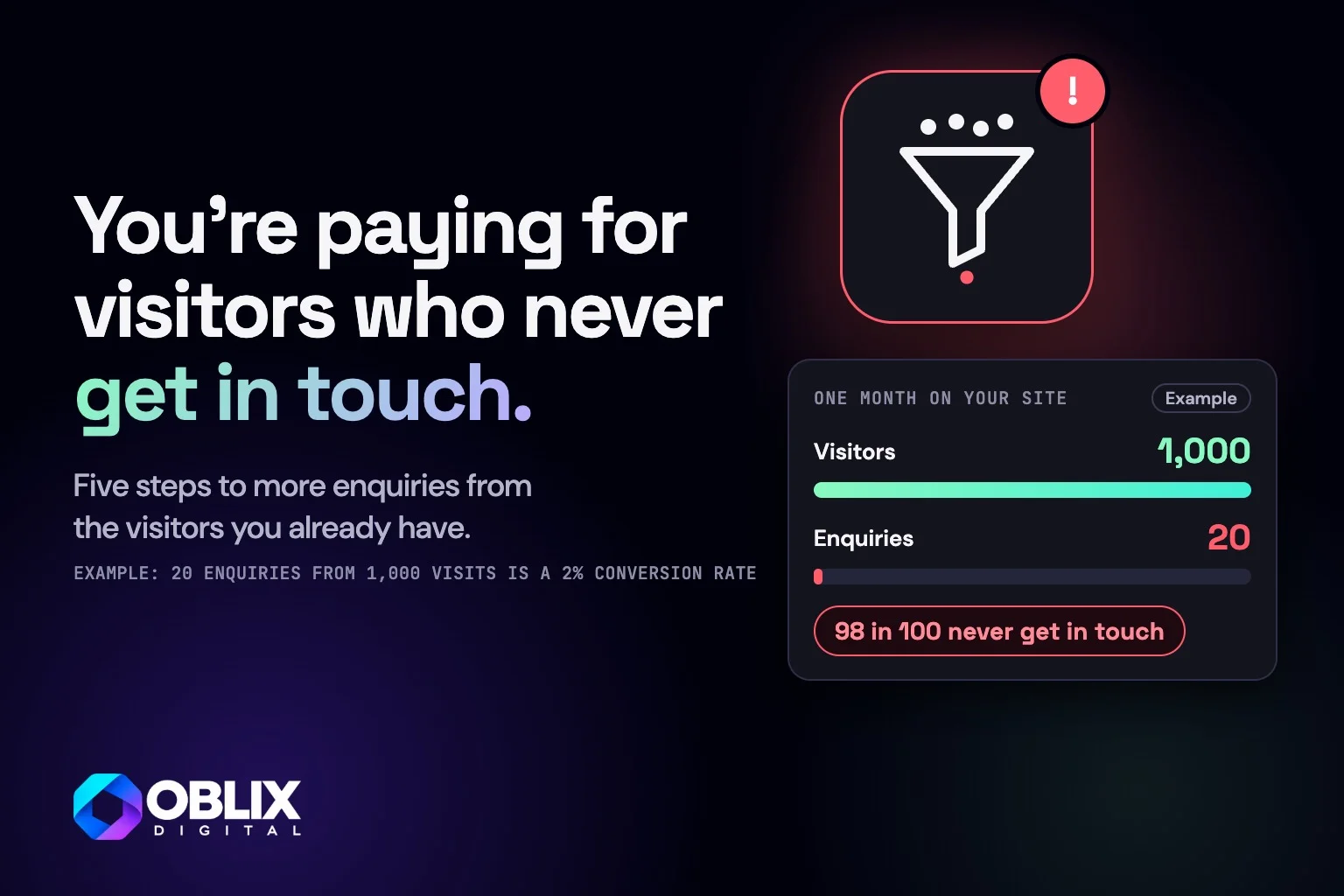
As an example, 20 enquiries from 1,000 visits is a 2% conversion rate. CRO is the process of finding out why the other 98% left, fixing the biggest reasons and checking the fix worked.
Why CRO can be cheaper than more traffic
The maths is simple. If your conversion rate goes from 2% to 3%, you get 50% more enquiries from the same visitors, and you haven't spent another penny on ads or content. It also makes every other channel work harder. A better page improves the return on your Google Ads, your SEO and your social posts at the same time.
Before you start, run through the quick checks in why your website isn't getting enquiries. There is no point testing small changes while the contact form is broken.

Swipe or scroll through, and tap a slide to see it larger
Step 1: Measure the enquiries you get now
You can't improve what you can't count. In Google Analytics, mark the actions that matter as key events (Google's name for conversions in Analytics): form submissions, taps on your phone number, booking confirmations or purchases. Then write down your starting point: visits and enquiries per month for the last few months. That baseline is what every change gets compared with.
Step 2: Find where visitors drop off
Look for pages that get plenty of visits but few enquiries, especially the ones your ads or top searches send people to.
Heatmaps and recordings. Microsoft Clarity is free and shows where people click, how far they scroll and where they get stuck.
Search terms. Google Search Console and your ads reports show what people searched for. If the page doesn't answer that search, it won't convert.
Real questions. The questions customers ask on the phone are often the ones your page fails to answer.
Step 3: Watch five people try to use your site
This is the cheapest test there is. Ask five people who don't know your business to find a service and get in touch while you watch quietly, without helping.
5 people
Enough for a first usability test, according to Nielsen Norman Group
85%
The share of usability problems that first round typically finds
Fix what they struggled with, then test again with a few new people.
Step 4: Change one thing and say what you expect
Write each change down as a simple prediction: "If we put the phone number in the header on mobile, more people will call." Or: "A clear 'Request a Quote' button near the top will bring more quote requests." Change one thing at a time where you can, so you know what made the difference. Good first tests for most small businesses:
The headline. Say what you do, for whom and where, in plain words.
The main button. One clear action near the top of the page, with wording like "Get a quote" instead of "Submit".
The form. Remove fields you don't need before the first reply.
The proof. Move real reviews and photos of your work next to the button.
The landing page. Send each ad to a page about that exact service, never the homepage.
Step 5: Measure long enough to trust the result
A/B testing (showing two versions of a page to different visitors at the same time) needs a lot of traffic to give a reliable answer. With a few hundred visits a month, a site can take a long time to reach a fair verdict.
So compare like with like instead: the same number of weeks before and after, avoiding bank holidays and your busiest season. Count qualified enquiries, the ones you would actually want to quote for rather than button clicks.
A change that brings in more enquiries but fewer good ones has made your website worse.
Which CRO tricks should you avoid?
Avoid fake countdown timers, invented "only 2 left" messages and pop-ups with hidden close buttons. They can lift clicks briefly and cost you trust for good. Good CRO makes the right decision easier for the right customer.
If you're paying for traffic, the landing page matters even more. I explain what to check in why your Google Ads aren't getting leads, and pages built around enquiries are part of my web design and development work. Want a second pair of eyes on where your site loses people? Get in touch and I'll take a look.
Frequently asked questions
What is conversion rate optimisation in simple terms?
It means changing parts of your website one at a time and measuring whether more visitors take the action you want, such as sending an enquiry or booking. The aim is more customers from the visitors you already have.
How do I work out my website's conversion rate?
Divide the number of enquiries, bookings or sales by the number of visits over the same period, then multiply by 100. For example, 20 enquiries from 1,000 visits is 2%.
What is a good conversion rate for a small business website?
There is no single figure that suits every industry, traffic source and goal. Measure your own baseline and compare it with itself over time, using the same definition of an enquiry.
Is CRO worth it for a small website?
Yes, as long as you can count your enquiries and you fix the obvious problems first. Small sites rarely have enough traffic for A/B tests, so watching real users and comparing before and after periods works better.
Do I need expensive tools for conversion rate optimisation?
No. Google Analytics, Google Search Console and Microsoft Clarity are free, and watching five people use your site costs nothing but time.
What should I test first to get more enquiries?
Start with the headline, the main button, the length of your form and where your reviews sit. If you run ads, make sure each one lands on a page about that exact service.