Email Marketing for Small Businesses: How to Build a List and Send Your First Campaigns

Suley Tangun
Digital Marketing Specialist
Published · 6 min read
Email marketing for a small business starts with three things: a sign-up form that tells people exactly what they'll get, a welcome email that arrives straight away, and one useful email a month that you can keep sending. Start small: permission and a good reason to open your emails matter far more than the size of your list.
The bottom line
- What it can bring in
- Repeat bookings and referrals from people who already know you, without paying for every click
- What it takes
- A monthly platform fee as your list grows, plus an hour or two per email
- What to do
- Start collecting sign-ups, then send your first campaign using the steps below
- Conclusion
- Worth it if customers buy from you more than once or recommend you to others
Why should a small business bother with email?
Your email list belongs to you. Social media reach can change overnight when a platform changes how it shows posts, and ads stop the moment you stop paying. An email lands in the inbox of someone who asked to hear from you. It works best for businesses where people come back or tell friends: salons, trades with servicing work, cafés, shops and anyone selling a regular service.
How to build an email list from scratch
Start with the people who already deal with you, then make signing up easy wherever they meet your business.
On your website. A short form in the footer and on your contact page, asking for an email address and little else.
At booking or checkout. An unticked box with plain wording, such as "Send me a monthly email with tips and offers". The ICO says pre-ticked boxes don't count as consent.
In person. If customers sign up at the counter or on a job, record when and how, so you can show they agreed.
Existing customers. You may be able to email past customers under the soft opt-in, a narrow exception for people who bought from you. Check the conditions first.
I explain consent, the soft opt-in and what Gmail and Yahoo require in email marketing dos and don'ts. Read it before your first send.
What should your sign-up form say?
Tell people what they'll get and how often: "One email a month with seasonal tips and first notice of new dates." A clear promise attracts the right people and sets expectations, so fewer feel misled later.
Google's sender guidelines also suggest confirming each address before adding it to your list. A quick "click to confirm" email keeps typos and fake addresses out, which protects how inboxes judge your emails.
Your first emails: what to send
A welcome email, sent automatically
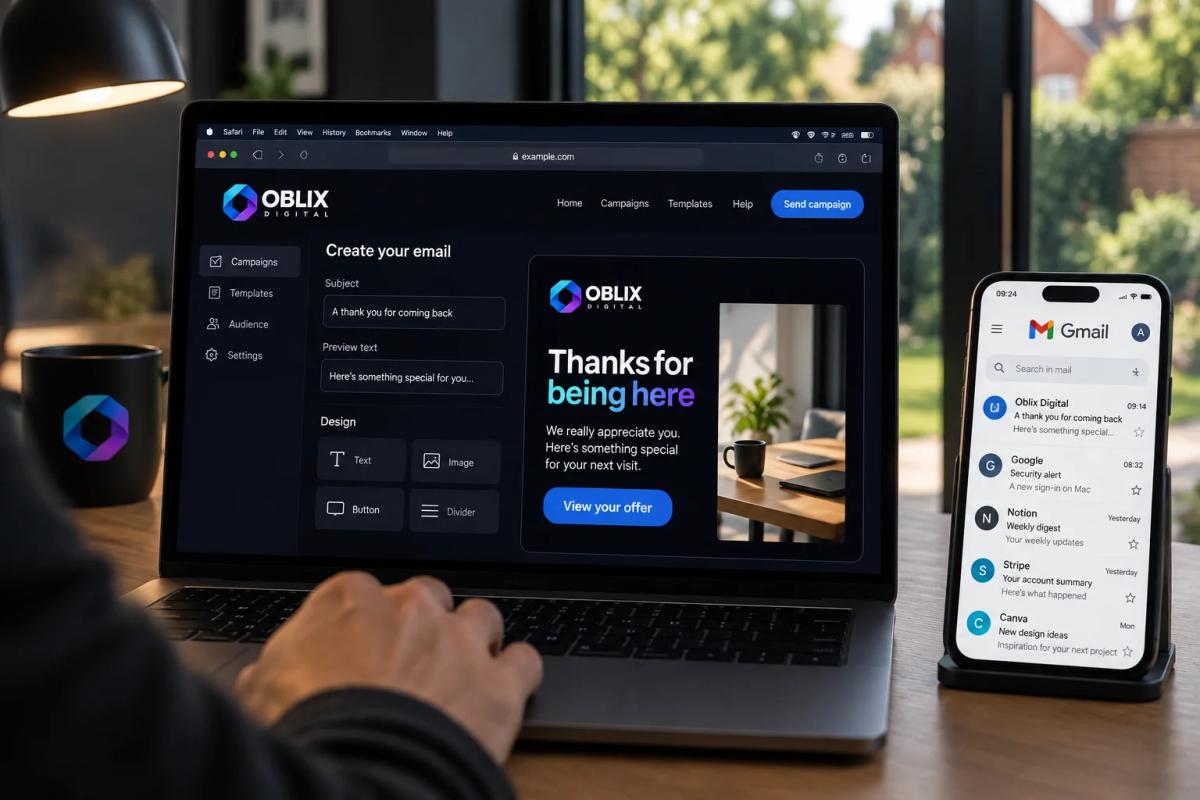
This goes out the moment someone signs up, while they still remember why. Say thanks, remind them what they'll get, and point to one useful thing on your website, such as a guide, your prices or your booking page.
One regular email you can keep up
Pick a schedule you can actually stick to, whether that's monthly or fortnightly. A steady rhythm beats a burst of emails followed by months of silence.
Ideas that work for most small businesses
Answer a question customers often ask. It shows expertise and saves you repeating yourself on the phone.
A timely reminder. Servicing, seasonal treatments, renewals or booking ahead for busy periods.
Real news. A new service, new opening hours or a recent job you're proud of.
A genuine offer, now and then. Only if it's real, and never with a fake deadline.
Should you split your email list?
Yes, once you have more than a handful of subscribers. Even a simple split into new subscribers and existing customers makes each email more relevant, because a first-time visitor and a five-year customer need different messages. Most email platforms let you tag people by how they signed up or what they bought, which is usually enough to start.
How do you measure whether email marketing is working?
Look at clicks, replies, bookings and enquiries, and keep an eye on unsubscribes. Open rates are much less reliable than they were, because Apple's Mail Privacy Protection, when people switch it on, stops senders seeing whether an email was opened.
The best measure of an email is what people did next: booked, replied or bought.
Compare each email with your own previous ones, not with industry averages.
How to choose an email platform
Price as your list grows. Many platforms charge by the number of contacts, so check what the next tier costs.
Exporting your list. Make sure you can download your subscribers if you ever move.
Sign-up forms and automation. At minimum, an embeddable form and an automatic welcome email.
Help with sender setup. Good platforms walk you through the domain settings Gmail and Yahoo expect.
Your website does a lot of the work here, from the sign-up form to the pages your emails link to. If you're weighing email against other channels, see organic vs paid social media, and if your site needs a proper sign-up form, that's part of my web design work. Not sure where to start with your first campaign? Get in touch and we can talk it through.
This is general information, not legal advice. Check the ICO's current guidance before emailing anyone without clear consent.
Frequently asked questions
How do I start email marketing for my small business?
Add a short sign-up form to your website, set up an automatic welcome email and plan one useful email a month. Make sure everyone on your list has agreed to hear from you.
How do I build an email list from scratch?
Ask the people who already deal with you: a sign-up form on your website, an unticked opt-in box at booking or checkout, and sign-ups in person with a record of when and how they agreed.
Can I add my existing customers to my email list?
Possibly, under the soft opt-in, if you got their details during a sale, you only email about similar products or services and you offered an opt-out then and in every email. Otherwise, ask for consent first.
How often should a small business send marketing emails?
As often as you can keep up with something useful to say. Monthly or fortnightly both work, and a steady schedule beats bursts followed by long gaps.
What should my first marketing email be?
A welcome email sent automatically when someone signs up. Thank them, remind them what they'll receive and point them to one useful page on your website.
Are email open rates still worth tracking?
Treat them with caution. Apple's Mail Privacy Protection can stop senders seeing whether an email was opened, so clicks, replies and bookings tell you far more.