Google Ads or SEO: Do Both for Results Now and Long Term

Oblix Digital
Web design & SEO
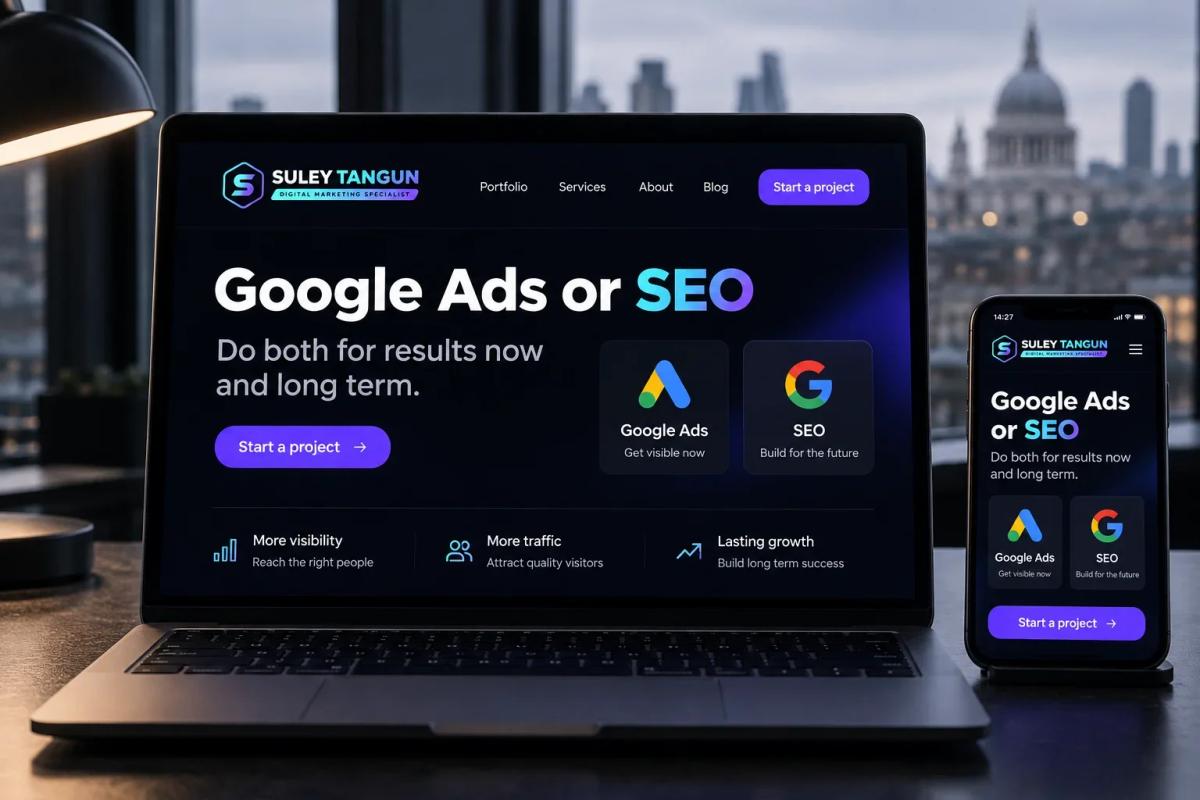
This question comes up early in most conversations with new clients: should the budget go on Google Ads or on SEO? There is no universal choice. Paid search and SEO can complement each other, but the right mix depends on demand, budget, margin, competition and how quickly you need qualified enquiries. They solve different problems, and treating them as competing options often leads to choosing the wrong one for the wrong reason.
The difference is time
Paid search can start showing once a campaign is approved and eligible, sometimes within hours. Placement is not guaranteed and depends on auction eligibility, bids, relevance, budget and competition. SEO builds position gradually. A competitive keyword can take months to move, sometimes longer, with no guarantee of exactly when or how far.
Neither is better in the abstract. One brings enquiries now and the other builds for the years ahead, which is why they work well together.
What paid search is good at
- Testing which keywords and offers convert before committing to them long term.
- Filling a short-term gap, such as a quiet month or a new location that needs awareness quickly.
- Precise targeting by location, time of day and device.
When you pause a campaign, its paid placements stop; any returning visitors, brand awareness or learnings from the campaign may still have value.
What SEO is good at
- Building traffic that keeps arriving without paying for each click.
- Compounding: a well-ranked page from two years ago can still be a strong source of enquiries today.
- Trust: some people prefer the organic results and scroll past the ads.
The limitation is time. Nobody can promise a page one ranking by a specific date, and anyone who does is either guessing or targeting a keyword nobody else wants.
Why do both
Ads can produce visibility quickly when there is eligible search demand, while SEO usually takes longer and has no guaranteed outcome. Use each only where it has a measurable role; organic growth does not automatically mean paid spend should be reduced.
In practice, most of my clients end up running both, at different levels depending on what the business needs that quarter.
How to split a limited budget
You do not have to split it evenly. If cash flow is tight and you need enquiries this month, put more into paid search and run SEO steadily in the background. If you can afford to be patient, you can lean towards SEO, but few small businesses can rely purely on organic growth in their first year.
If you are working out where your budget should go, that conversation is worth having before you spend anything. Get in touch and I'll give you a considered view based on your market, not a generic answer.
Views are my own and not those of my employer.
Related reading
Frequently asked questions
Should I choose Google Ads or SEO?
If you want results now and in the long term, do both. Ads bring enquiries straight away and stop when the budget ends. SEO builds gradually and keeps working. You can weight your budget towards one or the other depending on what the business needs.
Is SEO more cost-effective than paid search in the long run?
Often, once a page is established, because you are not paying per click. SEO is not free, though: it costs time or money upfront and takes longer to show results, so lower cost does not mean faster or risk-free.
Can I do both at the same time?
Yes, and it is often the most sensible approach. Paid search covers the gap while SEO builds, and you can reduce ad spend once organic traffic picks up.
How quickly does paid search work?
Campaigns can go live within a day, but expect the first couple of weeks to be about learning what works rather than seeing ideal results immediately.
Does stopping SEO work mean I lose my rankings straight away?
No. Rankings tend to fade gradually rather than disappear overnight, but content that is not maintained eventually loses ground to competitors who keep working on theirs.