Likes Don't Pay the Bills: Is Social Media Working for Your Business?

Suley Tangun
Digital Marketing Specialist
Published · 8 min read
To tell if social media is working for your business, stop counting likes and start counting enquiries. Tag every link you share, ask every new customer how they found you, and compare what comes back with the hours and ad money you put in. If you can't trace a single enquiry to social after a fair test, change what you post or move the effort elsewhere.
The bottom line
- What to measure
- Enquiries and sales that came from social, not likes
- What can go wrong
- Hours posting for people who never buy, and ad money spent on likes because the campaign chased engagement
- What to do
- Tag your links and add one "how did you hear about us" question to your enquiry form. It takes an hour or two
- Conclusion
- Do this before you spend another pound or another evening on social
Here are five checks, in order.

Swipe or scroll through, and tap a slide to see it larger
1. Count enquiries instead of likes
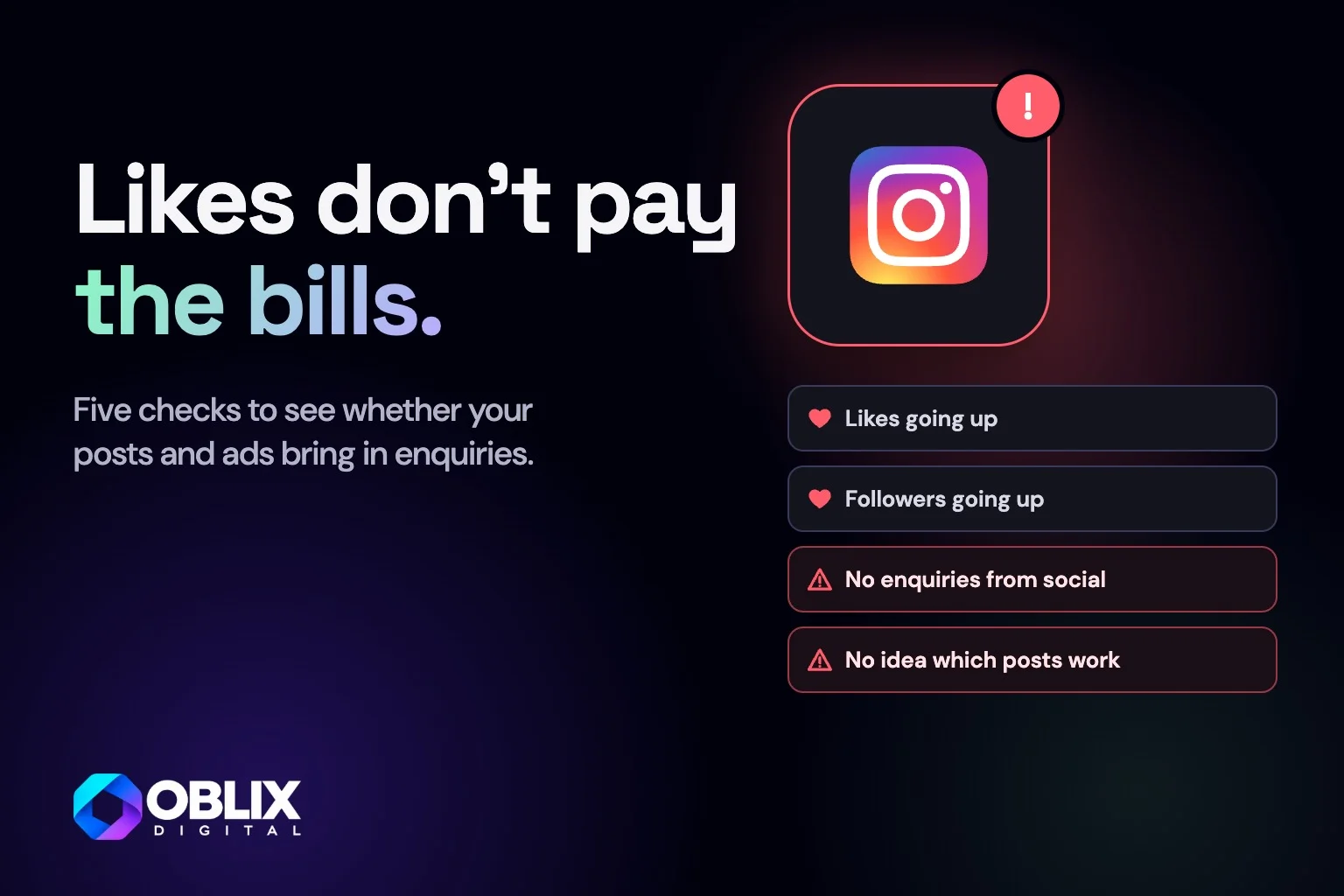
Reach, likes and followers are easy to see, which is why every platform puts them first. None of them tells you whether anyone picked up the phone. A post can collect hundreds of likes from people outside your area who will never buy. A plain post can bring in one enquiry worth more than all of them put together.
What to measure instead
Enquiries from social. Calls, forms, messages and bookings that started with a post or an ad.
Website visits from social. How many people clicked through, and what they did once they arrived.
Customers won. How many of those enquiries turned into paid work, and what that work was worth.
What it cost you. Ad spend plus your own hours planning, filming and replying. Organic social has no ad fee, but your time is a real cost.
How to tell if your organic posts are pulling their weight
Instagram and Facebook give you free insights for each post. Look past likes to shares, saves, profile visits and link taps, because those show someone wanted to know more. Once a month, note which posts led to messages or enquiries and make more like those. Drop the formats that get attention but never lead anywhere.
2. Tag every link you share
A UTM link is your normal web address with a few tags added to the end. The tags tell Google Analytics exactly where each visitor came from. Google says to always include three tags: utm_source (where the link was shared, such as instagram), utm_medium (the type of link, such as social) and utm_campaign (what you were promoting).
yoursite.co.uk/?utm_source=instagram&utm_medium=social&utm_campaign=spring-offer
Put a tagged link in your bio, your posts and your ads. Spell the tags the same way every time, because Google treats "Instagram" and "instagram" as different sources. You will then see those visits, and any enquiries they led to, in the traffic acquisition report in Google Analytics. Without tags, visits from the link in your Instagram bio can show up under a referral source such as l.instagram.com, split away from the visits you tagged.
3. Add the Meta Pixel if you run ads
If you run ads, add the Meta Pixel to your website. It is a small piece of code that tells Meta when someone who saw or clicked your ad goes on to do something useful, such as sending your contact form. Without it, Meta can mostly only report clicks.
Then check the campaign objective. Meta asks you to choose one, such as engagement, traffic or leads, and finds people likely to do that thing. Ask for engagement and you'll get likes, which is not the same as enquiries.
4. Ask every customer how they found you
Plenty of people see your posts for weeks, then search your name on Google or ring you directly. Tracking tools will credit Google or a direct visit, and social gets none of the credit. A "How did you hear about us?" question on your enquiry form, and the same question on the phone, fills that gap. Keep a simple tally each month.
The most useful tracking a small business can set up is often one question on the enquiry form.
5. Find where people drop off
Give it a fair test first: one clear offer, posted or advertised consistently, measured the same way throughout. Then look at where people drop off.
Visits but no enquiries. Check the offer and the page people land on before blaming the platform. My guide to websites that look good but get no enquiries covers the usual causes.
Likes but no visits. Your posts entertain but don't give people a reason to click. Add a clear next step to each one.
Nothing after a fair test. Try a different platform, or move the money to search ads. I compare the two in Google Ads vs Facebook Ads.
Still deciding how much effort to put into free posts versus ads? Start with organic vs paid social media. Not sure what your social media is really bringing in? Get in touch and I'll help you set up tracking you can trust.
Sources (4)
Google Analytics Help: URL builders, collect campaign data with custom URLs
Meta Business Help Centre: How to choose the right ad objective in Meta Ads Manager
The carousel for this guide uses Whistles Hair (whistleshair.co.uk), a Forest Hill salon whose website was built by Oblix Digital, as the example. The homepage and enquiry form are the live site, with demo details typed in and nothing sent; the "How did you hear about us?" field was added in the page only to show the idea, and the form's step subtitle and the homepage intro paragraph were hidden in the page only to keep the screens short. The Instagram, Google Analytics, Ads Manager and Events Manager screens are drawn illustrations with demo data and no real figures.
Frequently asked questions
How do I know if social media is working for my business?
Count enquiries, bookings and sales that came from social, not likes. Tag the links you share with UTM tags, use the Meta Pixel if you run ads, and ask every new customer how they found you.
What is a UTM link?
A UTM link is your normal web address with tags added to the end, such as utm_source, utm_medium and utm_campaign. Google Analytics reads the tags so you can see which visits and enquiries came from each post, ad or platform.
What social media metrics matter for a small business?
Enquiries, bookings and sales matter most, followed by clicks to your website, shares, saves and profile visits. Likes and follower counts are the least reliable sign that social media is bringing in work.
What does the Meta Pixel do?
The Meta Pixel is a small piece of code on your website that tells Meta when someone who saw or clicked your ad takes an action, such as sending a contact form. It lets you judge Facebook and Instagram ads on enquiries rather than clicks.
Is organic social media free?
There is no ad fee, but planning, filming, posting and replying all take time. Count those hours as a real cost when you judge whether it is worth it.
When should I stop spending time on social media?
After a fair test with one clear offer and consistent posting, if you still can't trace any enquiries to social, change the platform or the content, or move the effort to search ads or SEO.