More Traffic Won't Fix a Website That Leaks Enquiries: The Marketing Funnel Explained Simply

Suley Tangun
Digital Marketing Specialist
Published · 9 min read
A marketing funnel is the path someone takes from first hearing about your business to becoming a customer. It's wide at the top, where lots of people notice you, and narrow at the bottom, where a few buy. Knowing your funnel shows you where people drop off, so you fix that stage instead of paying for traffic that leaks away.
The bottom line
- Why it helps
- You stop paying to send visitors to pages that don't turn them into enquiries
- What it takes
- An afternoon working out how your last few customers found you
- What to do
- Map how your last few customers found you, then fix the weakest stage first
- Conclusion
- The quickest way to decide whether you need ads, SEO or a better website first
What is a marketing funnel in simple terms?
Think of a high street shop. Hundreds of people walk past. Some glance in the window, a few come inside, fewer pick something up and only some of those go to the till. A marketing funnel is that same shape applied to your business, online and offline: lots of people at the start and fewer at each step. If you've heard an agency talk about "top of funnel" or "bottom of funnel", that's all they mean: people early in the journey and people close to buying.
What are the stages of a marketing funnel?
Marketers name the stages differently and there is no single official version, but they usually look like this.

Swipe or scroll through, and tap a slide to see it larger
1. Awareness: they have a problem and don't know you yet
Someone's boiler is making a noise, or their website looks dated. They search, scroll or ask a friend. They want answers and haven't started looking for a business yet.
What helps: useful blog posts, social media, video, local listings and sometimes ads. The job here is to be seen and be helpful.
Straight answers get you seen early, before anyone has shortlisted a business. The Whistles Laser Clinic website, which I built, has an FAQ page with straight answers on cost, pain, sessions, results and safety, sorted by topic.
2. Consideration: they're comparing options
They know the problem and are weighing up who could fix it. They read reviews, look at examples of work and compare prices.
What helps: a clear website, case studies, honest pricing information, reviews and answers to common questions. The job here is to look like a safe, sensible choice.
Put real results and reviews where people can't miss them. Whistles Laser Clinic's results page lets visitors drag a slider to compare real before and after photos, with Google reviews on the same page.
3. Decision: they're ready to act
They've narrowed it down to a few names. They want to know how to get started, how long it takes and what happens next.
What helps: an easy contact form or phone number, a clear next step, quick replies and no surprises on price. The job here is to remove the last bit of doubt.
Spell out what happens after someone gets in touch. Send a confirmation email as soon as they enquire, with the next steps numbered, so they know exactly what comes next. For a clinic like Whistles Laser Clinic, those steps would be booking a consultation, discussing their goals, assessing their treatment needs and creating a personalised plan, the same consultation journey its homepage lays out step by step.
4. After the sale: they come back or recommend you
Many funnel diagrams stop at the sale. In practice, happy customers return, refer friends and leave reviews, which brings in the next person.
What helps: good service, follow-up emails and asking for a review. Make leaving one quick, on your own website: Whistles Laser Clinic has a testimonial page that takes under a minute, and every testimonial is checked before it goes on the site. Send the link after each visit. I cover the email side in email marketing dos and don'ts.
Why do some marketers draw the funnel as a circle?
Because real buying is messier than a funnel suggests. Google's research describes a "messy middle" between the moment someone starts looking and the moment they buy. In it, people switch between exploring, where they widen their options, and evaluating, where they narrow them down, and they can loop between the two many times.
You've probably done it yourself. You shortlist three businesses, get distracted, see an ad a week later, read a review, look at a fourth and finally buy from the first one.
The circle, sometimes called a flywheel, adds the idea that customers feed the next round: a good experience leads to a review or recommendation, which starts someone else's journey. Both pictures are useful. The funnel helps you decide what to do at each step, and the circle reminds you that people move back and forth and that happy customers bring in more.
How do you find where your funnel is leaking?
Look at the symptom, then fix the stage it points to. Money spent on the wrong stage doesn't help, which is why I sometimes suggest fixing a page before buying ads.
New website, hardly any traffic yet: check the middle and bottom first. Sending visitors to a site that doesn't explain what you do or make contact easy wastes whatever you spend getting them there.
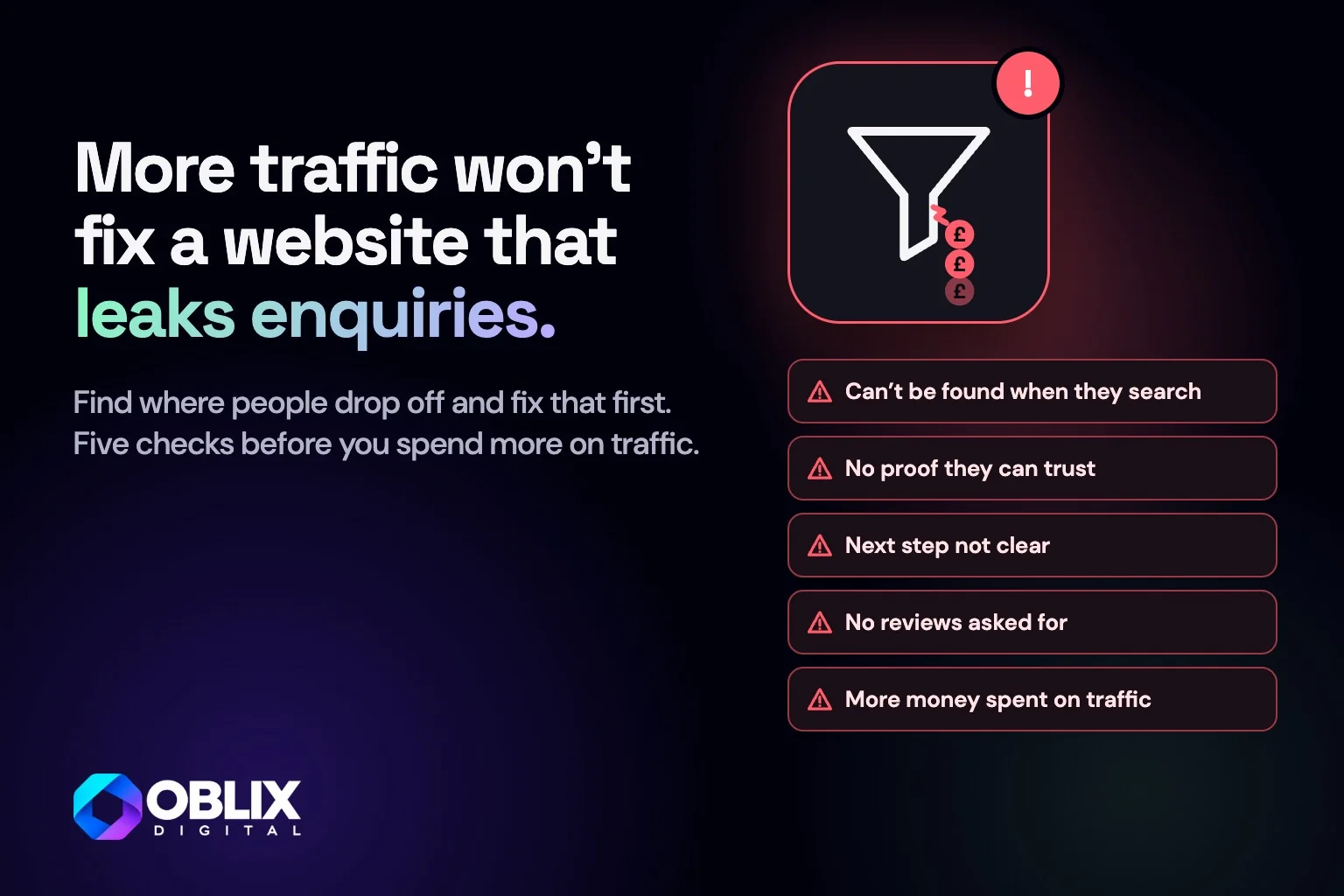
Plenty of visitors, few enquiries: the leak is at consideration or decision, and more traffic won't fix it. Clearer pages, proof and an easy next step usually do more. I go through the common causes in why a good-looking website gets no enquiries.
Good enquiries, just not enough of them: now awareness matters. That's where SEO, content and paid ads earn their keep.
People already searching for exactly what you sell: paid search such as Google Ads can work well, because the person is already close to deciding. Social ads tend to suit earlier stages, before people have gone looking. My post on paid search vs SEO covers the trade-offs.
Fix the stage where people drop off before you pay to send more people into it.
Plenty of visitors but few enquiries? Fix the stage where people stop, then pay for more visitors.
How to use the marketing funnel in a small business
Write down your last three customers' journeys. How did they find you, what did they check and what made them get in touch? That is your real funnel.
Check each stage. Can a stranger find you? Can they tell what you do and trust you? Is the next step obvious?
Fix the narrowest point first. Use your analytics or enquiry numbers to see where people drop off.
Keep the loop going. Ask happy customers for reviews and stay in touch.
You don't need a diagram or special software for any of this. Most small businesses can answer these questions in an afternoon. If you'd like help working out which stage is holding your enquiries back, get in touch.
Frequently asked questions
What is a marketing funnel in simple terms?
The steps someone goes through from first hearing about your business to becoming a customer. Many people enter at the top and fewer reach the end.
What are the stages of the marketing funnel?
Commonly awareness, consideration and decision, with many marketers adding a stage for what happens after the sale. Names vary and there is no single official version.
Is the marketing funnel outdated?
Not really, but it's a simplification. Google's research describes people looping between exploring and evaluating, so many marketers now picture a circle or flywheel as well.
What is the difference between a funnel and a flywheel?
A funnel ends at the sale. A flywheel or circle adds the way happy customers bring in the next ones through reviews and recommendations.
Which funnel stage should a small business fix first?
The stage where most people drop off. If visitors arrive but don't get in touch, fix your consideration and decision pages before paying for more traffic.
Do I need ads for every stage of the funnel?
No. Ads suit some stages better than others, and a clear website, reviews and good service often do more for the later stages.